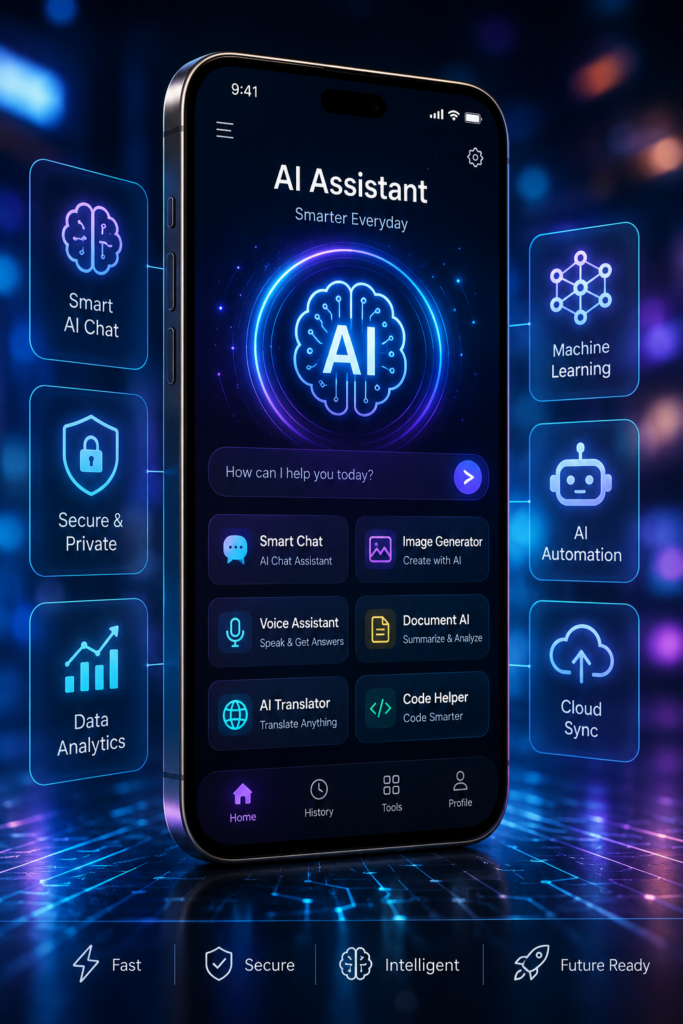
A Unified Intelligence Ecosystem is essential for modern businesses. Achieving clear operational distinction in contemporary business sectors necessitates a total departure from legacy single-purpose application setups. Implementing a Unified Intelligence Ecosystem helps businesses scale faster. The onboarding of autonomous digital architecture introduces machine-learning layers designed to process multi-format datasets, construct organic project prototypes, and execute technical workflows with zero manual supervision. Integrating these modern structures drastically compresses long production timelines, isolates points of human error, and establishes high-velocity organisational momentum. Our team can setup your Unified Intelligence Ecosystem fast.
⚡ The Ten Essential Functional Environments of 2026
Rather than presenting generic software rosters, our computing laboratory has analysed, and stress-tested the ten most resilient automated systems based on deployment stability and task execution velocity. Our team, Unified Intelligence Ecosystem fast.
1. Advanced Structural Comprehension Models
Processing complexes like ChatGPT and Claude AI manage sprawling textual criteria, full-stack code formulation, and extensive document analysis with immense stylistic precision.
2. Sourced Knowledge Retrieval Channels
Dynamic workspaces built on Perplexity AI sync native web indexes with real-time semantic search, substituting standard index links with complete, verifiable intelligence briefings.
3. Localized Source Aggregation Engines
Analytical hubs like NotebookLM act as hyper-secure local knowledge banks, rendering raw institutional documents into dynamic summaries or synthetic, conversational audio modules.
4. High-Fidelity Acoustic Generation Spaces
Speech processors spearheaded by ElevenLabs carry out realistic vocal synthesis, fluid cross-dialect translation, and environmental sound-effect engineering from basic text fields.
5. Multi-Layer Motion Graphic Desks
Visual synthesis programs like Runway allow enterprise creative groups to convert brief conceptual briefs or flat layer files into premium, high-resolution cinematic videos.
6. Interactive Engineering Development Environments
Premier developer platforms like Cursor pair modern code editors with intelligent agents capable of drafting, compiling, and debugging massive software builds natively.
7. Scalable Creative Distribution Kits
Enterprise marketing boards like Jasper AI leverage pre-trained algorithmic blueprints to deploy customized advertising copy variants and targeted web layouts simultaneously.
8. Competitive Optimization Monitors
Technical text editors like Surfer SEO evaluate real-time competitor keyword footprints, detailing exact phrase distributions required to reach premium organic search rankings.
9. Ambient Workplace Transcription Trackers
Meeting capture applications like Granola quietly register background audio feeds, shifting raw conversational data into structured team action directives immediately following call adjournment.
10. Automated Spatial Branding Modules
Design platforms utilizing Canva AI leverage automated layout matrices to construct corporate presentation decks, balanced social grids, and scalable vector assets within moments.
💎 Foundational Metrics of High-Tier Systems
Elite industrial platforms function as proactive workflow orchestrators rather than static command lines. We systematically audit specific infrastructural characteristics before authorizing a tool:
Contextual Behavioural Parity:
The software dynamically links with running background applications to adjust output parameters based on changing daily tasks.
Insulated Processing Sandboxes:
Secure applications protect corporate intelligence by keeping extensive machine-learning computations locked in local hardware rather than public cloud engines.
Simultaneous Multi-Channel Ingestion:
Systems read voice memos, complex graphical frameworks, and tabular sheets at the same moment to create cohesive data assets.
📈 Documented Returns on Digital Modernization
Shifting fragmented, manual communication steps onto unified cognitive setups generates immediate compounding advantages:
Subscription Consolidation:
Moving team protocols into a single, multi-functional framework eliminates overlapping single-use software licenses and recurring budget drain.
Total Human Input Defense:
: Handing over structured data entry and cross-database mapping to automated processing scripts completely prevents manual clerical errors.
Elastic Team Volume Scaling:
Modern business groups handle five times their baseline research requests and publication pipelines without increasing employee numbers or overhead expenses.
🔄 Our Phased Integration Framework
We execute your corporate system migration through a controlled, four-stage onboarding pipeline to ensure continuous system performance:
Stage 1: Pipeline Friction Evaluation
We map out your active operational processes to find the slow, repetitive manual habits that drain employee energy and billing hours.
Stage 2: Balanced Technical Matching
Our systems consultants cross-reference your specific capital budget against global digital tools to curate the most cost-effective arrangement possible.
Stage 3: Strict Structural Directive Engineering
We design and stress-test custom, system-level instructions for your chosen platforms, wiping out model hallucinations and securing predictable output values.
Stage 4: Continuous Performance Optimization
Our engineering team continuously reviews workflow metrics to optimize platform linkups, introduce system adjustments, and grow your final return on investment.
🛰️ Modernize Your Infrastructure Today
Ready to re-engineer your technical environment and reclaim massive pockets of hidden daily productivity? Connect with our systems integration desk to implement your custom workspace architecture today.
tel:7082697937
mailto:09alinaansari@gmail.com
Unified Intelligence Ecosystem: The 2026 Operational Paradigm
Achieving close operational distinction in contemporary business sectors necessitates a total departure from legacy single-purpose application setups. The modern corporate environment no longer thrives on isolated software solutions working in silos. Instead, forward-thinking enterprises are shifting toward a unified framework where data, processing power, and predictive analytics merge seamlessly. This systemic evolution marks the birth of the comprehensive cognitive architecture required to navigate market volatility.
Breaking the Silos of Legacy Software
Traditional corporate structures rely on independent platforms for supply chain management, customer relations, and financial tracking. This fragmentation forces human teams to act as the primary bridges between disconnected databases, introducing severe latency and operational friction. A unified setup removes these artificial boundaries by establishing a continuous data pipeline that feeds automated systems across all divisions simultaneously.
The Mechanism of Autonomous Workflows
When internal networks become cohesive, automation evolves past simple rule-based tasks. Advanced systems utilize live information streams to evaluate ongoing market fluctuations, adjusting supply chains and client-facing interfaces dynamically without manual oversight. This transition to hands-free internal regulation allows workforce talent to pivot entirely toward high-level strategy and long-term design.
Structural Resilience Through Predictive Modeling
Operating within a consolidated digital framework enables deeper predictive capabilities. By observing historical trends alongside real-time systemic changes, predictive algorithms can forecast infrastructure bottlenecks or sudden resource deficits well before they impact front-line services. This foresight converts standard damage control protocols into a model of active prevention, preserving operational stability across complex global networks.
Conclusion
By 2026, the Unified Intelligence Ecosystem acts as a seamless, living infrastructure that merges ambient sensing, autonomous AI, and secure networks to transform human capability from fragmented tool usage to proactive, symbiotic evolution. The future necessitates a shift from merely utilising this technology to dynamically evolving alongside its proactive, intelligent infrastructure. Unified Intelligence Ecosystem.
